Debug UART
Debug Uart is the debug serial console for the Quectel Pi M1/L1. It is used to connect the development board via a USB-to-TTL serial tool, allowing you to view boot logs, enter the system console, and execute debug commands on the computer side. Unlike network-based methods such as SSH and VNC, Debug Uart does not depend on network or graphical interfaces, making it suitable for troubleshooting low-level issues such as system boot, network anomalies, and display problems.
Preparation
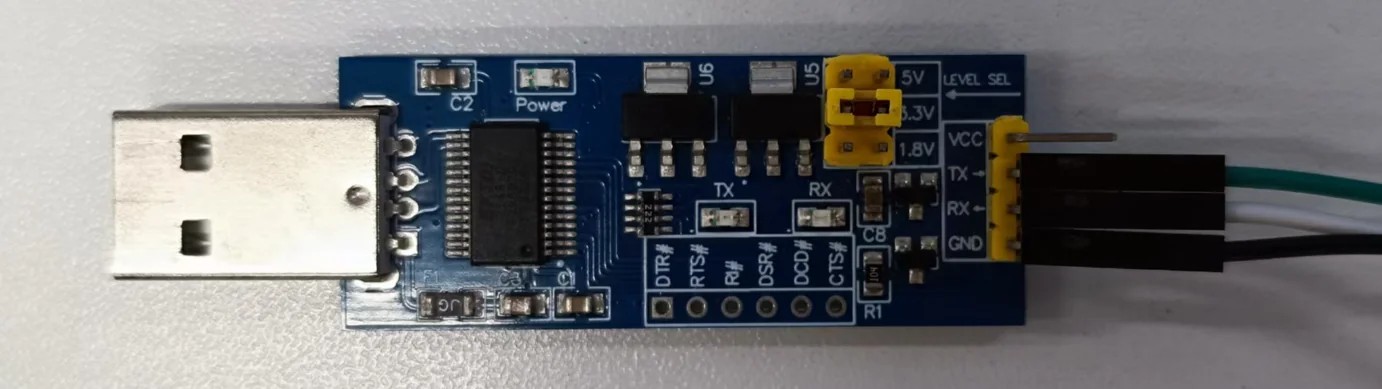
Prepare a USB-to-TTL serial adapter and 3 Dupont wires. Ensure the serial adapter supports 3.3 V logic level.
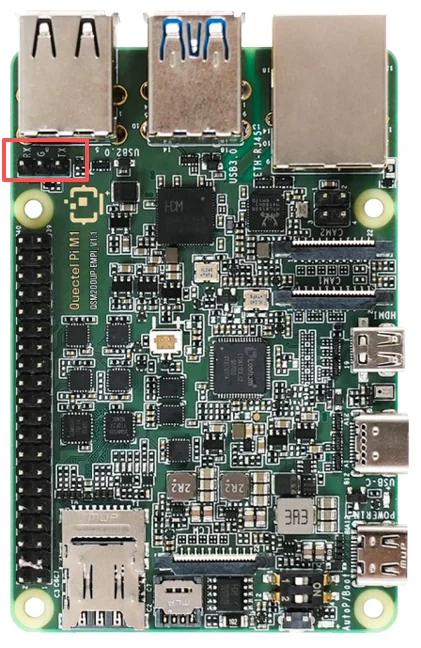
Locate the Debug Uart interface on the Quectel Pi M1 / L1 and connect the serial wires according to the wiring diagram.
💡 When using a USB serial data cable to connect to the smart main control board, ensure the pin connections are correct. Incorrect pin connections may prevent serial communication and, in severe cases, may damage the hardware.
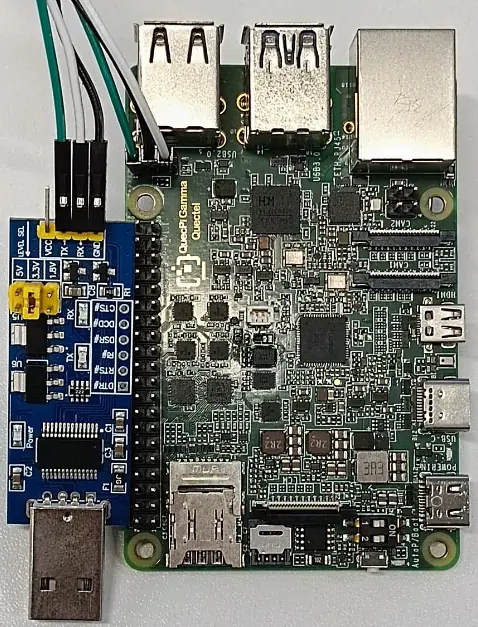
Connect the USB-to-TTL serial adapter to the computer and confirm that the computer can recognize the serial port.
Windows: Check the serial port number in Device Manager, e.g.,
COM8.Linux: Check the
/dev/ttyUSB*or/dev/ttyACM*device nodes.
Prepare serial terminal software. On Windows, QPiTerminal is recommended. On Linux,
picocomcan be used.
Software Installation
The host computer needs serial terminal software and the corresponding USB serial driver.
Windows
On Windows, QPiTerminal is recommended for serial connections. If the computer cannot recognize the USB-to-TTL serial device, install the corresponding driver first, such as CH340, CP210x, or FTDI driver, depending on the chip used by the serial adapter.
After plugging in the USB-to-TTL serial adapter, you can check the corresponding serial port number in Device Manager, e.g., COM8.
Linux
On a Linux computer, the device is typically recognized as /dev/ttyUSB* or /dev/ttyACM*. You can execute the following command to check:
ls /dev/ttyUSB* /dev/ttyACM* 2>/dev/null
To use picocom, install it:
sudo apt update
sudo apt install -y picocom
Software Configuration
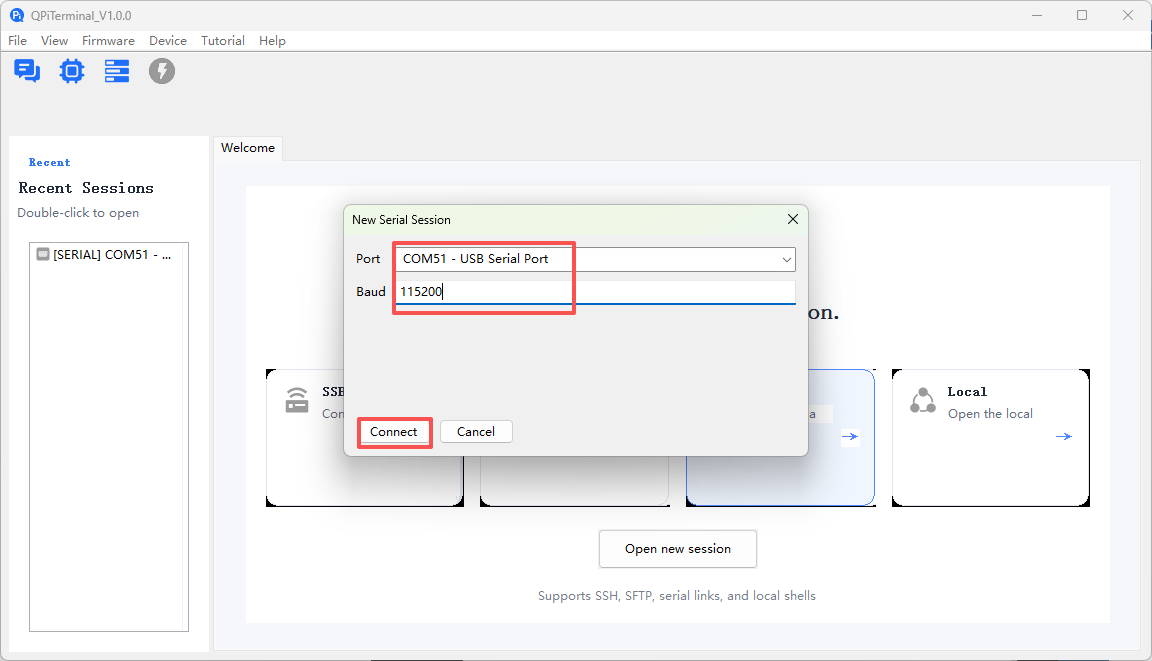
When using QPiTerminal, select Serial as the connection method, click Open new session, and in the pop-up window select the serial port number recognized by Device Manager, then set the baud rate to 115200.
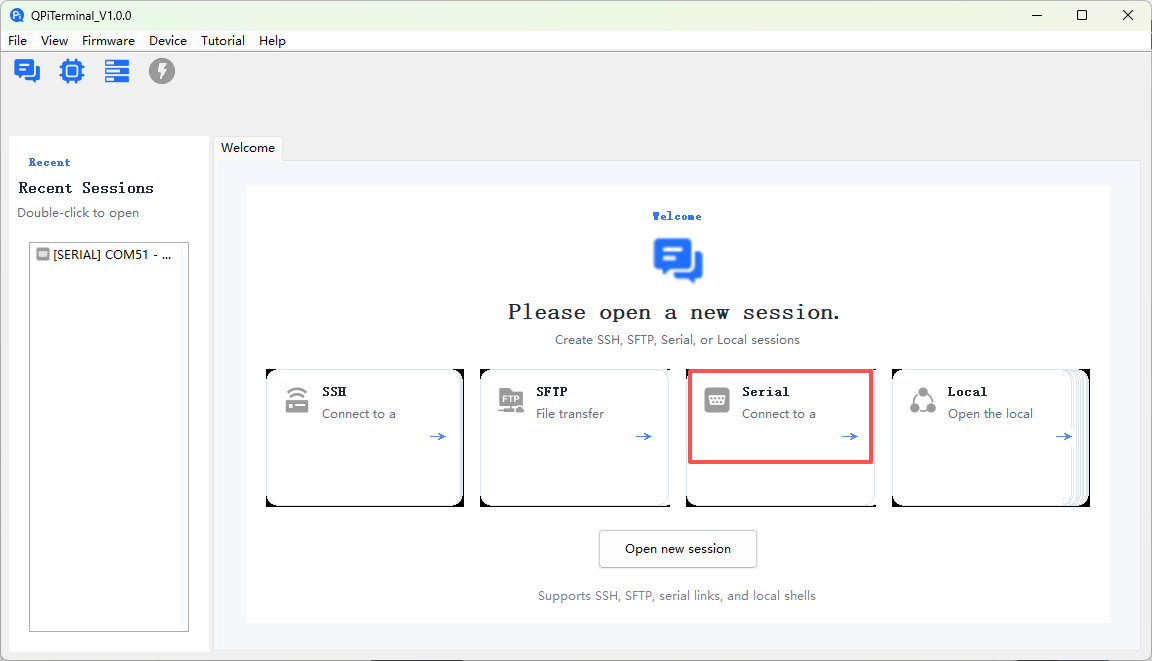
In the New Serial Session window, confirm the serial port number and baud rate, then click Connect to establish the serial connection.
Software Startup
Debug Uart does not require starting a separate network service on the development board side. Once the hardware wiring is correct and the computer-side driver and serial terminal are properly configured, simply open the serial terminal to use it.
Starting QPiTerminal on Windows
Connect the USB-to-TTL serial adapter to the computer.
Confirm the serial port number in Device Manager.
Open QPiTerminal and select Serial as the connection method.
Click Open new session, select the serial port number, and set the baud rate to 115200.
Click Connect to open the serial port window.
Using picocom on Linux
Execute on the PC:
sudo picocom -b 115200 /dev/ttyUSB0
Where /dev/ttyUSB0 should be replaced with the actual device node recognized.
To exit picocom, press:
Ctrl+A, then Ctrl+X
Serial Console
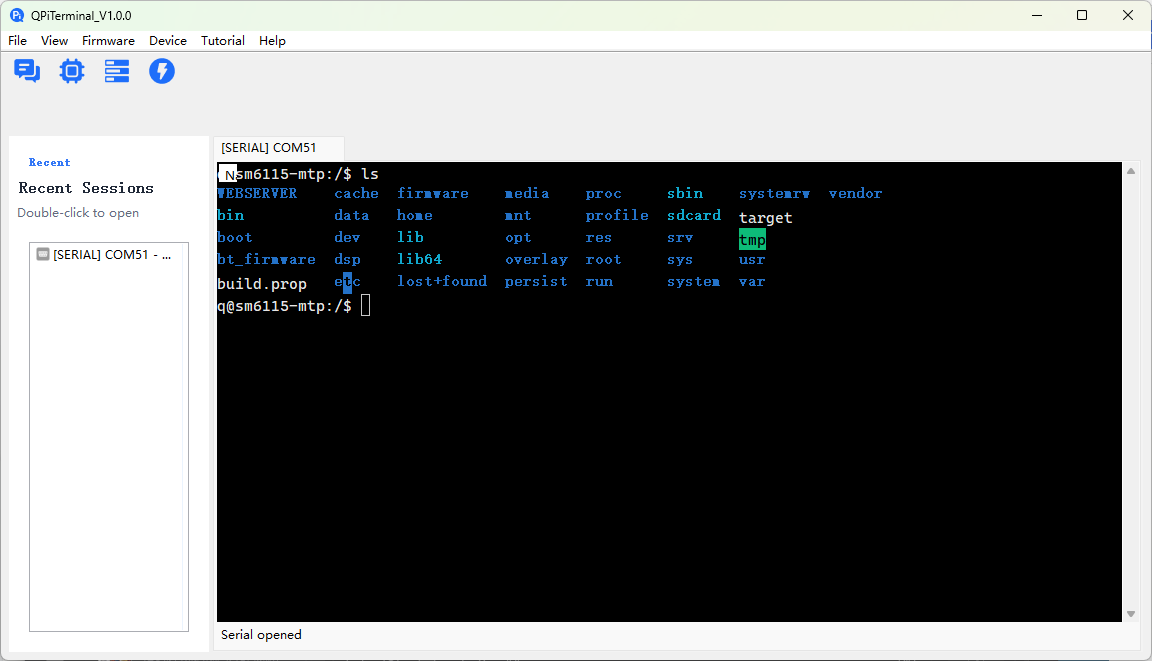
After opening the serial terminal, power on or restart the development board to see the boot logs. Once the system has finished booting, press Enter in the terminal interface and enter commands to test.
ls
If you can see the system directory listing, it indicates the serial console is working properly.
Troubleshooting
Symptom |
Troubleshooting Method |
|---|---|
No serial port number on the computer |
Check if the USB-to-TTL serial adapter is properly plugged in; confirm the corresponding driver is installed; try a different USB cable or USB port. |
No output in the serial port window |
Check if GND, TXD, and RXD are connected correctly; confirm TXD is connected to RXD and RXD is connected to TXD; confirm the serial logic level is 3.3 V. |
Garbled output |
Check if the baud rate is set to 115200. |
Only partial logs visible |
Open the serial terminal first, then power on or restart the development board to avoid missing early boot logs. |
Cannot enter commands |
Confirm the system has finished booting; press Enter to activate the console; check if the serial tool is in input-ready state. |